- Lawn Care
- Soil & Compost
Fall Lawn Topdressing in Oklahoma: Level, Patch, and Thicken Your Yard
How to topdress with compost, level low spots with a sand mix, and time it right for a thicker lawn.

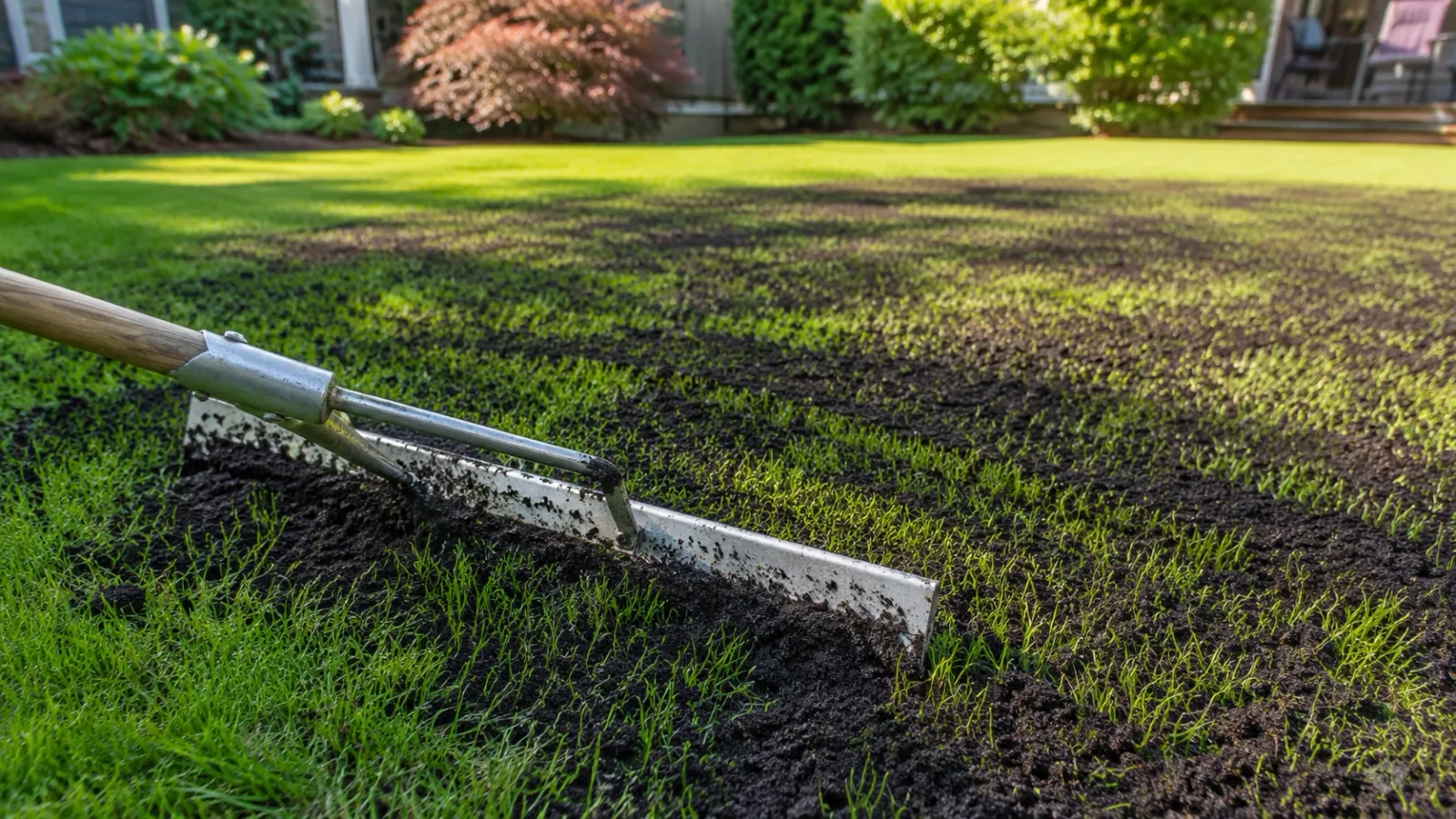
If your lawn is bumpy, thin, or full of bare spots, topdressing is the cheapest fix there is, and fall is the time to do it in Oklahoma. A thin layer of the right material levels the surface, feeds the soil, and sets up a thicker lawn come spring. Here is exactly how to do it and what to use.
The quick answer
Topdressing means spreading a thin quarter-inch layer of compost or a soil mix over your lawn. Use compost to feed it, a screened sand mix to level low or bumpy spots, and topsoil to fill bare patches. In Oklahoma, do it in fall for fescue lawns, right alongside overseeding, so the grass roots in through the mild fall and takes off in spring.
What topdressing actually does
Topdressing is not a cosmetic trick. A thin, even layer works four jobs at once:
- Levels the surface. It fills the small dips, ruts, and bumps that make mowing rough and let water pool.
- Feeds the soil. A compost layer adds organic matter and slow, gentle nutrients right where the roots are.
- Fills bare spots. Combined with seed, it gives thin or dead patches something to grow back into.
- Fixes clay over time. On Oklahoma's heavy red clay, a light topdressing each year slowly loosens the soil so roots go deeper and the lawn handles heat and drought better.
What material to use
Match the material to the job:
- To feed and thicken: screened compost. It is the classic topdressing and the best all-around choice for most lawns.
- To level low or bumpy areas: screened sand or a sand-and-compost leveling mix. Sand spreads easily, will not compact into the clay, and lets you fill dips without smothering grass.
- To fill deeper bare patches: topsoil or garden soil, then seed on top.
Whatever you choose, it needs to be screened so it spreads in a thin, even layer instead of clumping.
How to topdress your lawn, step by step
- Mow a little short and bag the clippings so the material reaches the soil.
- Aerate or dethatch first if your lawn is compacted or thatchy. Topdressing works far better on aerated ground.
- Fill the low spots and bare patches with your leveling mix or topsoil, and rake them roughly level.
- Spread a thin layer of compost over the whole lawn, no more than a quarter to a half inch. Small piles dragged around with the back of a rake work fine for a home lawn.
- Work it in. Drag a stiff rake, a leveling tool, or a piece of chain-link fence across the lawn so the material settles down between the blades. You should still see grass poking through.
- Overseed now if you are doing it. Fall topdressing and overseeding go hand in hand.
- Water lightly and keep it moist for the next couple of weeks while everything settles and any new seed comes up.
When to do it in Oklahoma
Timing depends on your grass:
- Fescue and cool-season lawns: early September into October. This is the prime window and the same time you overseed, so do both together.
- Bermuda and warm-season lawns: late spring into early summer, when the grass is growing hard and can recover quickly.
For most Norman-area lawns that means fall is your moment. Get it done before the first hard cold snap so roots have time to settle.
How much material do you need?
Topdressing is sold by the cubic yard, so turn your lawn into a volume:
(Lawn area in square feet) x (Depth in inches) ÷ 324 = cubic yards
At a quarter-inch layer, 1,000 square feet needs about three-quarters of a cubic yard. So a 5,000 square foot lawn runs right around 4 cubic yards. Filling deeper low spots and bare patches takes extra on top of that. Not sure on your numbers? Our material calculator does the math for you.
Ready to topdress this fall?
Whether you are feeding the whole lawn with compost, leveling ruts with a sand mix, or patching bare spots with topsoil, we carry it screened and by the cubic yard. Browse all our materials, then give us a call with your yardage for pickup, or have it delivered across Norman and the OKC metro. Not sure which material or how much? Reach out with your lawn size and we will help you sort it out.
People Also Ask
Common Questions About This Topic
What is lawn topdressing?
Topdressing is spreading a thin layer of compost or a soil mix over your existing lawn. It feeds the soil, smooths out bumps and low spots, helps fill bare patches, and slowly improves heavy clay so grass roots grow deeper.
When should I topdress my lawn in Oklahoma?
For fescue and other cool-season lawns, fall (September into October) is the best window, and it pairs perfectly with fall overseeding. For bermuda and other warm-season lawns, topdress in late spring or early summer when the grass is actively growing.
What is the best material for topdressing?
Use screened compost to feed the lawn, a screened sand or sand-and-compost mix to level low or bumpy areas, and topsoil or garden soil to fill deeper bare patches before seeding. Screened material is key so it spreads in a thin, even layer.
How thick should topdressing be?
Keep it thin, about a quarter to a half inch at most. You should still see the grass blades poking through after you spread and rake it in. Burying the grass under too much material will smother it.
How much topdressing material do I need?
Multiply your lawn area in square feet by the depth in inches, then divide by 324. At a quarter-inch, 1,000 square feet needs about 0.77 cubic yards, so roughly three-quarters of a yard per 1,000 square feet.