- Guide
- Seasonal Care
How to Protect Plants From the First Freeze in Norman, OK
When the first freeze usually arrives, which plants actually need help, and the right way to cover, water, and mulch.

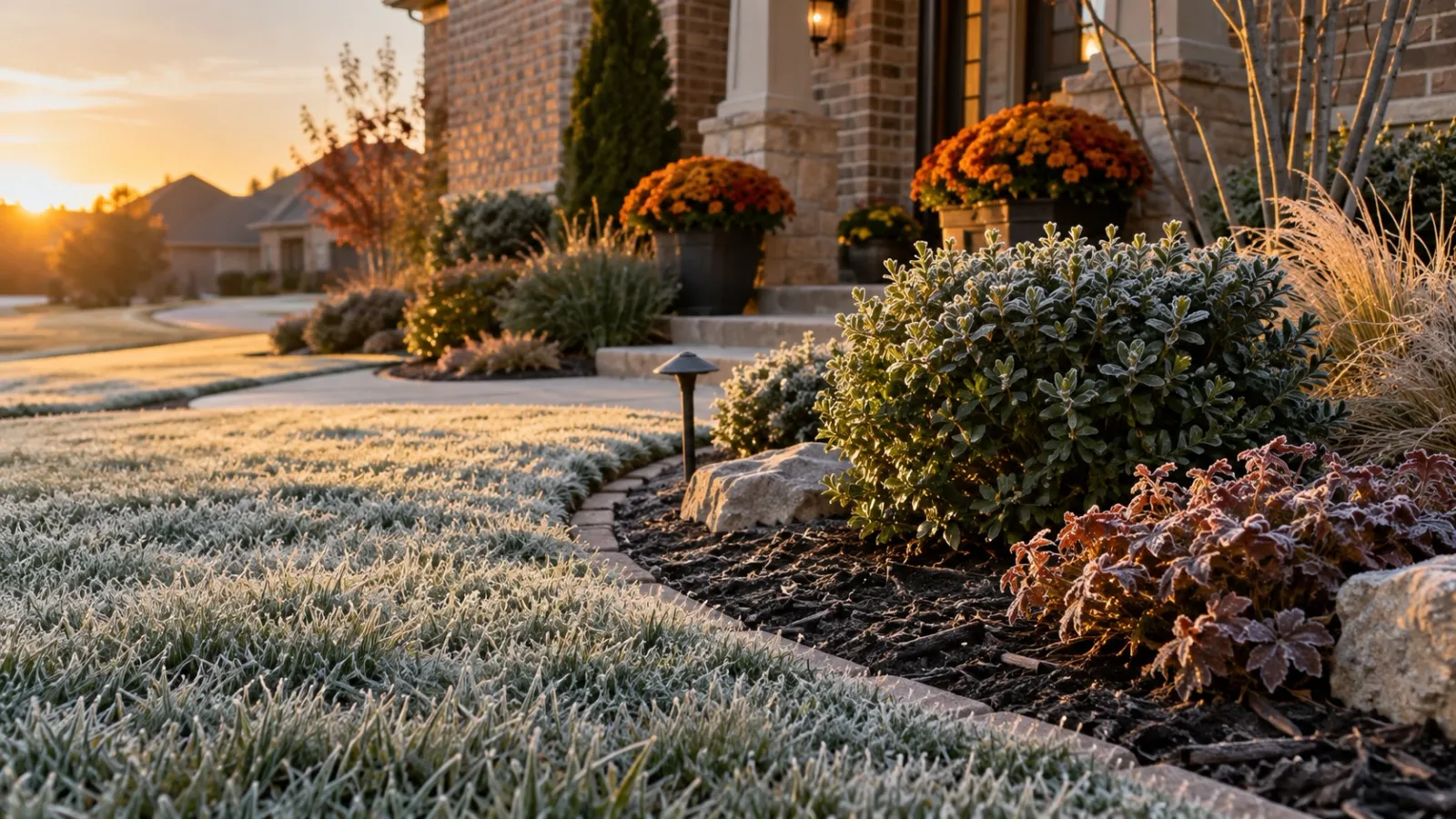
Most of your landscape will come through Norman's first freeze just fine. Oklahoma State University Extension notes that few landscape plants recommended for Oklahoma die directly from cold weather during an average winter, and that matches what we see at our yard: after the first freeze, we rarely hear from customers about damaged trees, shrubs, or beds. What actually needs your help is a short list: tender annuals and summer vegetables, potted plants, and anything you planted in the last few weeks. Water them, cover them on freeze nights, and save the heavy winter mulch for after the first hard freeze.
When the first freeze usually hits Norman
Here are the odds of Norman reaching each temperature by a given date, from long-term climate records for Norman compiled by Garden.org:
| Temperature | 10% chance by | 50% chance by | 90% chance by |
|---|---|---|---|
| 36°F (frost can form) | October 11 | October 25 | November 6 |
| 32°F (first freeze) | October 21 | November 3 | November 17 |
| 28°F (hard freeze) | October 27 | November 12 | November 27 |
| 24°F | November 4 | November 21 | December 9 |
In plain terms: a first freeze before about October 21 is uncommon, half of all years see 32 degrees by about November 3, and almost every year has had its first freeze by mid-November. The hard freeze that finishes off summer annuals usually comes a week or two after that.
One more thing worth knowing: frost can form above 32 degrees. On clear, calm nights, leaves and the ground radiate heat to the open sky and can drop below freezing even when the air a few feet up reads 34 or 35. Cloudy, breezy nights are safer. Low spots in the yard, where cold air settles, frost first.
What actually needs protecting
| Plant | Risk at the first freeze | What to do |
|---|---|---|
| Established trees, shrubs, and mulched beds | Low | Nothing special. Water if the fall has been dry. |
| Tender annuals and summer vegetables (tomatoes, peppers, basil) | High | Harvest what you can, then cover on freeze nights. |
| Potted and tropical plants | High | Move them into a garage or the house. Roots in a pot sit above ground with no soil around them to hold warmth. |
| Trees and shrubs planted this fall | Moderate | Water deeply before the freeze; add winter mulch after the first hard freeze. |
| Broadleaf evergreens (holly and similar) | Low at first, then dry winter wind | Water about once a month during dry winters. |
The point of this list is to save you work. You do not need to blanket the whole yard every time the forecast dips. Focus on the few plants that are genuinely tender or not yet rooted in.
How to cover plants the right way
- Water first. OSU Extension calls watering plants several hours before a freeze "the first defense against damage." Water the soil, not the leaves, and do it early enough in the day to soak in. In heavy clay, water slowly so it does not run off.
- Cover in the evening. Sheets, blankets, burlap, or frost cloth all work. OSU recommends using a frame so the cover does not touch the plant.
- Take it all the way to the ground. The warmth that protects plants overnight comes from the soil. A cover that stops halfway down lets it escape. Weigh the edges down so Oklahoma wind cannot lift them.
- Keep plastic off the leaves. Plant parts touching plastic in a freeze are likely to be damaged. If plastic is all you have, put a sheet underneath it or hold it up on stakes.
- Uncover the next morning. Once temperatures climb back above freezing, pull covers off so plants get light and do not overheat under a sunny cover.
For a light freeze around 30 to 32 degrees, this is usually all tender plants need. A hard freeze in the 20s will usually finish off summer annuals and vegetables even under a cover, so harvest the last tomatoes and peppers before one is forecast.
The mulch question, answered honestly
This is where a lot of advice gets muddled, and it is worth separating two different things:
- Your regular mulch layer (2 to 3 inches over your beds) can be refreshed any time in fall. It holds moisture and steadies soil temperature, and if your beds already have that much, you do not need more before the freeze. Our guide on the best time to mulch in Oklahoma covers this.
- Winter mulch is the extra layer you add over tender perennials, roses, and new plantings to get them through winter. OSU Extension says to wait until after a killing frost to apply it, and OSU horticulturists note you can wait until after a few hard freezes, which helps plants harden off.
Why wait? Winter mulch is not a blanket to keep plants warm. Its job is to keep the soil steadily cold so it does not freeze at night and thaw in the afternoon over and over. In Oklahoma, where a 25 degree night can be followed by a 65 degree afternoon, that freeze-and-thaw cycle is what heaves shallow-rooted perennials and fall plantings right out of the ground. Spread it 2 to 3 inches deep, keep it pulled back from stems and trunks, and pull back any deep mounds by early spring. Chopped leaves work well for this too, and they are free.
The honest takeaway: do not rush out to buy mulch because a freeze is in the forecast. If you need some, the right time for winter mulch is after the first hard freeze, and a well-mulched bed is already protected.
A few things to skip right now
- Do not prune. OSU discourages pruning from mid-August until a killing frost, because it can push tender new growth right before the cold. Remove only dead or broken branches.
- Do not fertilize. Late fertilizer encourages growth that the cold will damage. OSU recommends feeding landscape plants between early spring and mid-August.
- Do not forget the plants under the eaves. Beds under a roof overhang and plants in containers miss most of the rain. OSU's winter protection fact sheet reminds gardeners to water both, and notes that planters protected from rain need water even in a wet season.
After the first freeze
If you planted trees or shrubs this fall (see our guide on planting trees in October), give them a deep watering after the first few light frosts and add winter mulch once a hard freeze has passed. OSU's David Hillock recommends exactly that sequence for shrubs in this OSU article. Then keep an eye on rainfall. Dry, windy winter stretches are harder on evergreens than the cold itself.
We carry natural, cedar, and pine bark mulch and compost by the cubic yard at our Norman yard, for pickup or delivery across Norman and the surrounding area. If you are not sure whether your beds need more mulch this fall, call us at (405) 826-2001 and we will give you a straight answer.
People Also Ask
Common Questions About This Topic
When is the first freeze in Norman, OK?
Norman's first 32 degree night usually lands in late October or early November. Based on historical climate data for Norman, there is about a 10 percent chance of hitting 32 degrees by October 21, a 50 percent chance by November 3, and a 90 percent chance by November 17. Frost can form on plants a few degrees above freezing on clear, calm nights, so watch forecasts in the mid 30s too.
What temperature should I cover my plants?
Cover tender plants any night the forecast calls for 32 degrees or colder, and consider covering in the mid 30s on clear, calm nights, when frost can form on leaves even though the air stays above freezing. Low spots in the yard get cold first. Established trees, shrubs, and mulched perennial beds generally do not need covering for the first freeze.
Should I water my plants before a freeze?
Yes. Oklahoma State University Extension calls watering plants several hours before a freeze the first defense against damage. Moist soil holds and releases more heat than dry soil. Water the soil around the plants, not the leaves, and do it earlier in the day so it soaks in before the temperature drops.
Can I use a tarp or plastic to cover plants from frost?
You can, but do not let plastic touch the leaves, because plant parts touching plastic during a freeze are likely to be damaged. Put a sheet or blanket over the plant first, or hold the plastic off the plant with a frame or stakes. Whatever you use, let it reach all the way to the ground to trap heat rising from the soil, and take it off the next morning once it warms up.
Should I mulch before the first freeze?
Keep your regular two to three inch mulch layer topped up any time in fall. The extra winter mulch you pile over tender perennials and new plantings is different: Oklahoma State University Extension says to wait until after a killing frost to apply it. Winter mulch works by keeping the soil steadily cold, which stops the freeze-and-thaw cycles that heave plants out of the ground.