- Guide
- Seasonal Care
What to Do With Fall Leaves in Norman, OK
Mow them in, mulch with them, compost them, or haul them off: how to pick, and why bagging them for the trash is the worst option.

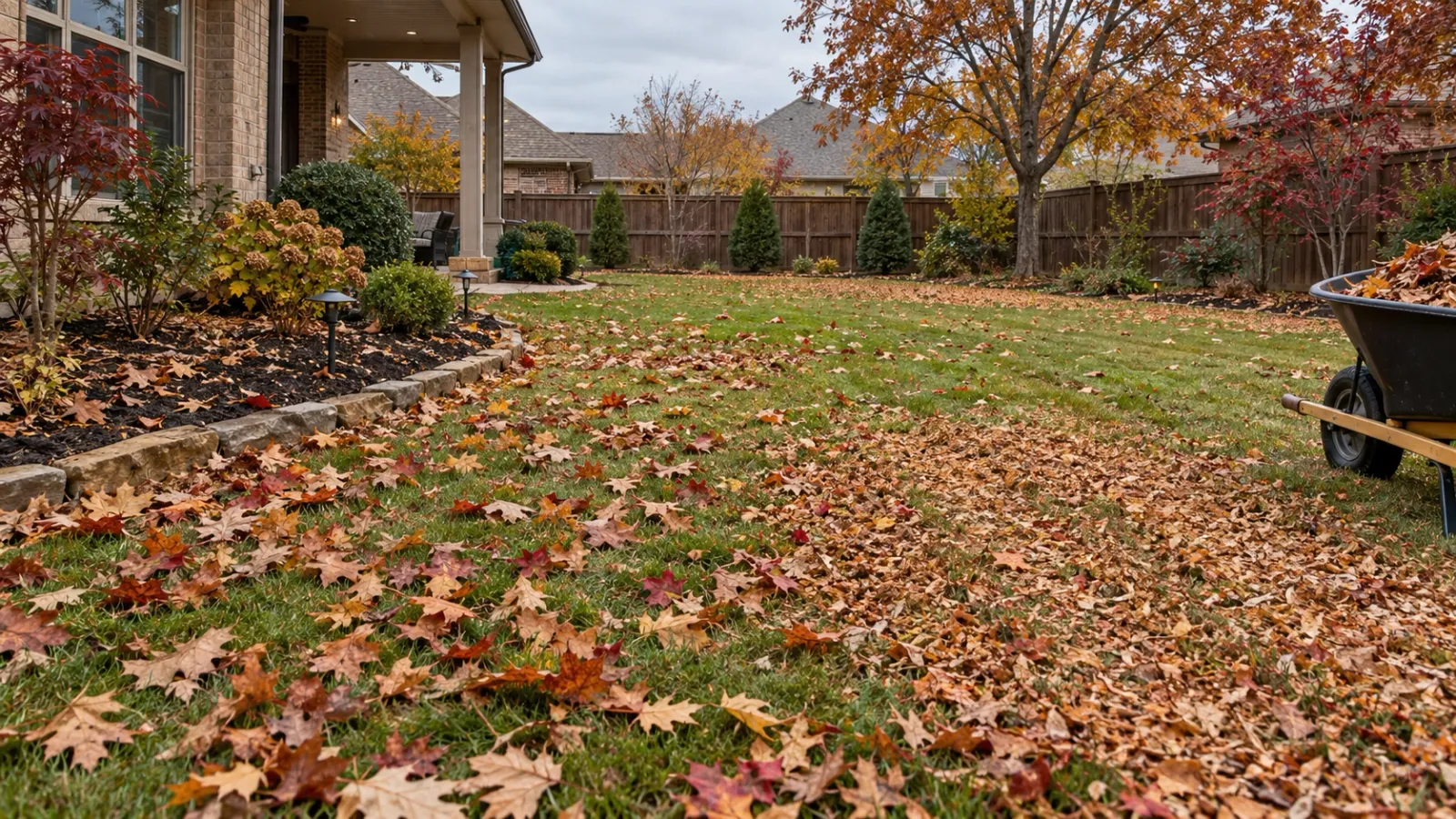
For most Norman yards, the best thing to do with fall leaves is mow them right into the lawn, then use any extra as free mulch or compost. Raking them into plastic bags for the trash is the worst option: as Oklahoma State University Extension's David Hillock puts it, bagged leaves "don't do much more than take up valuable landfill space." If you have more leaves than your yard can use, you can haul them to our Norman yard, where leaves are priced the same as brush. Just empty your bags there and take them home.
Your options at a glance
| Option | Cost | Effort | Best when |
|---|---|---|---|
| Mow them into the lawn | Free | Low | Leaves are dry and not piled deep |
| Use them as mulch in beds | Free | Moderate | You have beds, shrubs, or trees to cover |
| Compost them | Free | Moderate, takes months | You have a spot for a pile and want compost by spring |
| City of Norman curbside | Included with city service | Low | Normal amounts and you are not in a hurry |
| Drop off at our Norman yard | Flat fee by the load, same as brush | You haul it | Big loads, cleanup jobs, or you want it gone today |
Option 1: Mow them into the lawn
This is the fastest and easiest. OSU's advice is simple: "Put your lawn mower on the mulching setting and mow normally." The mower chops the leaves into small pieces that settle down into the grass, break down over the winter, and return organic matter and nutrients to the soil.
A few things make it work:
- Mow when the leaves are dry. Damp leaves clog mowers, shredders, and vacuums.
- Stay ahead of them. Mow regularly while the leaves are coming down, as OSU advises, rather than waiting for them all to fall. If they pile up too deep, they bog down the mower and it stops chopping cleanly.
- Do not let a thick layer sit. OSU notes a light layer of leaf litter will not hurt the grass, but a heavy blanket blocks light and can smother cool-season lawns like fescue, which keep growing through the fall and winter. OSU's winter protection fact sheet puts it plainly: do not allow fallen leaves to remain piled on lawn grasses.
Option 2: Use them as free mulch
Leaves make a good mulch for shrubs, trees, and perennial beds. OSU says a layer of 2 to 3 inches is enough around shrubs and trees.
Shred them first if you can. You do not need a leaf shredder: put a bagging attachment on your mower, mow over the leaves, and the bag fills with chopped leaves ready to spread. Shredded leaves have three advantages over whole ones:
- They stay put better in Oklahoma wind. Whole dry leaves blow right back onto the lawn.
- They break down faster and feed the soil.
- They are less likely to mat into a soggy layer that blocks air and water.
If you rake whole leaves into perennial beds, OSU suggests sticking to small leaves and avoiding big ones like sycamore, which can mat down and smother plants.
The honest part: leaf mulch is free, and for a lot of yards it can cover your beds through the winter without buying anything. It is a seasonal mulch, though. Chopped leaves break down quickly once spring warms up, so expect to top your beds with a longer-lasting wood mulch next spring. If wind keeps scattering your leaf mulch, a thin layer of wood mulch over the top will hold it in place, but that is optional, not required.
Chopped leaves also make a good winter mulch for tender perennials and new plantings. That extra layer goes on after the first hard freeze; our guide on protecting plants from the first freeze explains why the timing matters.
Option 3: Compost them
Leaves are one of the best compost ingredients there is, and OSU's David Hillock says you do not need a special bin: it can be as easy as "digging a hole behind your garage or other inconspicuous place and filling it with the leaves and other compost materials."
On their own, leaves can take anywhere from a few months to a couple of years to break down. To speed it up, OSU recommends:
- Shred them first. Smaller pieces break down much faster.
- Add nitrogen, such as green plant material from the garden.
- Keep the pile moist but not soggy.
- Turn it often to keep air moving through it.
If you have a vegetable garden sitting empty for the winter, OSU also suggests working leaves straight into the soil this fall. They will have time to break down before you plant in spring. In the meantime, if you need finished compost for beds right now, we carry it by the cubic yard.
Option 4: Haul them off
Sometimes there are simply more leaves than a yard can use, especially on lots with big oaks or after a cleanup job. You have two local options:
- City of Norman curbside collection. For normal amounts, the city's sanitation program is often the easiest route. Rules and schedules change, so check the City of Norman website for current guidelines.
- Our Norman yard. We take leaves at 2982 Melba Ln, Monday through Friday, 8 AM to 5 PM, priced the same as brush as a flat fee by the load. Two rules keep drop-off quick for everyone:
- Empty your bags and take them home. Bagged leaves are fine to bring, but the bags go back with you. We do not take trash of any kind, and plastic bags count as trash.
- Leaves and yard waste only. No household trash, construction debris, or anything that is not clean, organic yard waste.
Current load rates are on our drop-off page, and our guide to dropping off brush and yard waste near Norman compares every local option.
The short version
Mow them in while they are dry. Shred the extra and spread it 2 to 3 inches deep around shrubs and trees, or pile it up to compost. Haul off only what is left, and if you bring it to us, empty the bags and take them home. Questions about a big load? Call us at (405) 826-2001 before you head over.
People Also Ask
Common Questions About This Topic
Should you leave leaves on the lawn over winter?
Not in a thick layer. Oklahoma State University Extension notes that a light layer of leaf litter will not harm grass, but a heavy layer blocks light and can smother cool-season lawns like fescue. The easy fix is to mow the leaves with your mower on its mulching setting, which chops them into small pieces that break down and feed the soil.
Is mulching leaves into the lawn good or bad?
Good, as long as you do it before the leaves pile up too deep. OSU Extension says the chopped leaves return organic matter and nutrients to the soil. Mow when the leaves are dry, since damp leaves clog mowers and shredders, and stay ahead of it so a deep layer does not bog the mower down.
Can you use leaves as mulch without shredding them?
For small leaves, yes. OSU Extension suggests raking small leaves into perennial beds as a winter mulch, but avoiding large leaves like sycamore, which can mat down and smother plants. Shredding is better: chopped leaves break down faster, stay put better in Oklahoma wind, and are less likely to form a soggy mat.
How do you shred leaves without a leaf shredder?
Use your lawn mower. Put a bagging attachment on it and mow over the leaves; the bag collects them already chopped and ready to use as mulch or to add to a compost pile. OSU Extension recommends this exact approach. Make sure the leaves are dry first.
Can I drop off bagged leaves at Riverside Wood?
Yes. We take leaves at our Norman yard at 2982 Melba Ln, priced the same as brush, as a flat fee by the load. If your leaves are bagged, empty them at the yard and take the bags back home with you. We do not accept trash of any kind, and that includes the plastic bags.