- Guide
- Seasonal Care
What to Put on a Muddy Yard This Winter in Oklahoma
Wood chips for paws and boots, gravel or millings for tires, and the spots where you need to fix the drainage instead of covering it.

The fastest fix for a muddy yard is to cover the bare spots with the right material for the traffic they get. Where dogs and people walk, spread wood chips four to six inches deep. Where tires go, put down one-inch gravel or screened asphalt millings about four inches deep over a fabric. And where water sits after every rain, fix the drainage first, because no cover survives standing water. The lawn itself will not grow back over those spots until spring, so this winter the goal is clean boots and paws, not grass.
Why Oklahoma yards turn to mud in winter
Three things stack up here at once:
- The grass is asleep. Most Oklahoma lawns are bermuda or another warm-season grass. Oklahoma State University Extension's guide to selecting a lawn grass for Oklahoma describes these grasses as growing in summer and dormant in winter. A path your dog wore into the lawn in October stays bare until the grass wakes up in spring, and every trip across it in the meantime churns the clay underneath.
- Shade never held grass to begin with. The same OSU guide says plainly that warm-season turfgrasses cannot tolerate shaded sites. That bare, slick strip under the big tree or along the north side of the house was going to be mud every winter no matter what.
- The ground does not drain. Clay holds water, and many newer lots are worse. OSU Extension horticulture educator Laura Payne has explained that in newer neighborhoods, contractors scraped off the topsoil and compacted the clay, and replacement topsoil may be only six to eight inches deep. That compacted layer underneath acts like a hard pan that water cannot get through. It is a common story on rebuilt lots in Moore and on new home sites in Newcastle.
Match the cover to what is making the mud
- Dog run or fence line path: wood chips, 4 to 6 inches deep. Natural mulch at $32 per yard or 2-inch cedar at $46 per yard.
- Foot path to the gate, shed, or chicken run: wood chips, about 4 inches deep. Natural mulch or 2-inch cedar.
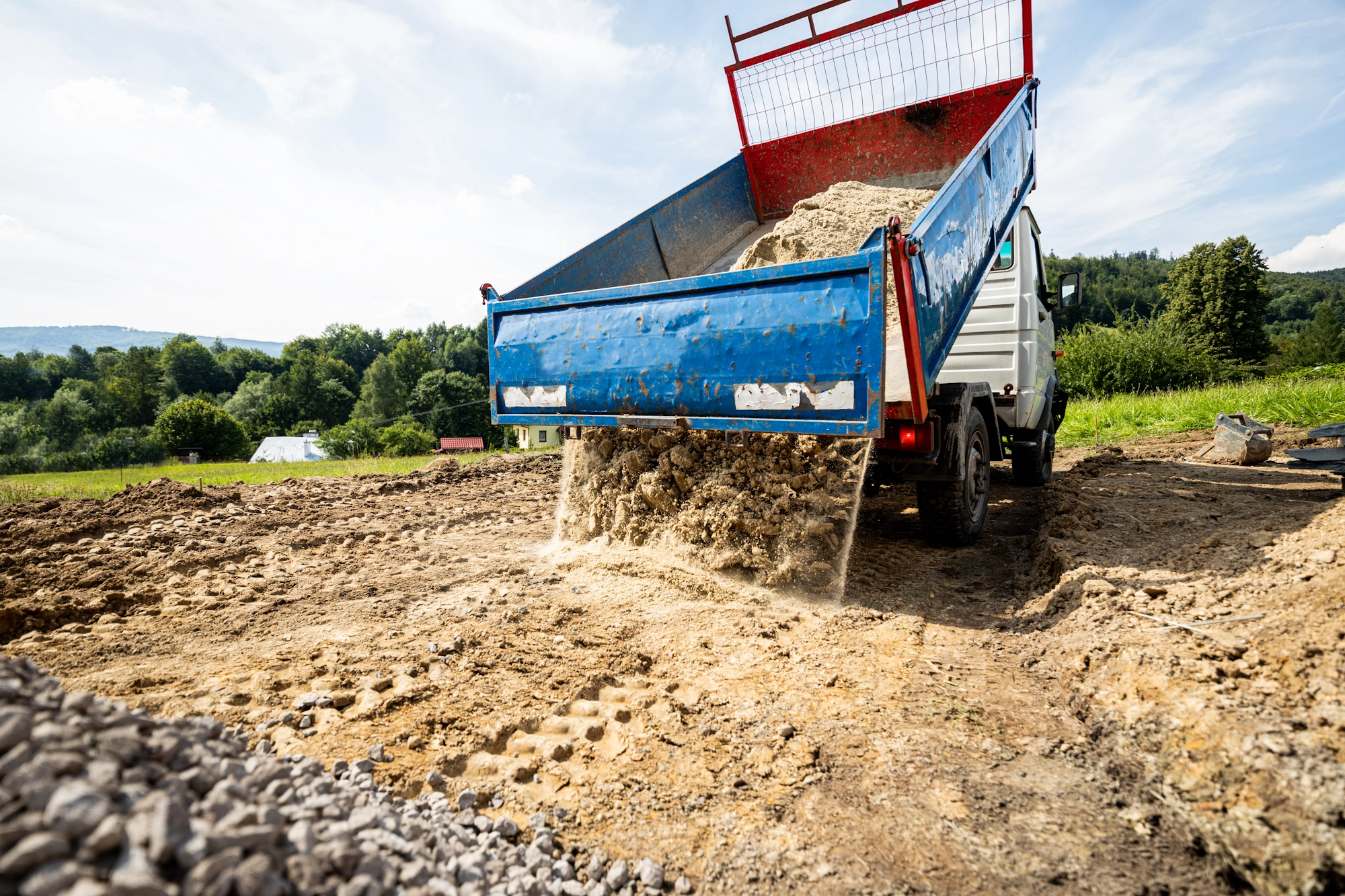
- Parking spot, trailer pad, or rutted driveway: rock over a geotextile fabric, about 4 inches compacted. 1-inch gravel at $44 per yard or screened asphalt millings at $26 per yard.
- Low spot that holds water: fix the grade first, then cover it. Topsoil to raise it.
- Bare lawn in full sun: leave it until spring, then topdress and seed or sod it.
Prices are per cubic yard, before tax, from our pricing page.
Wood chips for dog runs and foot paths
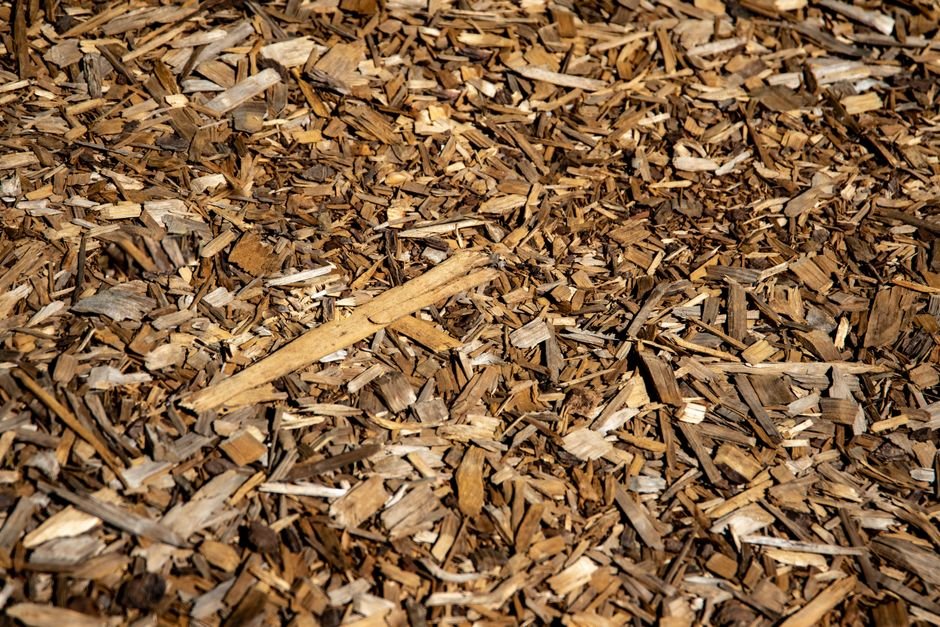
Wood chips are the go-to for mud from feet and paws. They let water through, they stay soft to walk on, and they are the same kind of surface many dog parks use instead of grass. A few things decide whether they work:
- Go thick. Four inches at minimum, six on a path your dog runs every day. A thin layer gets stomped into the mud within a few weeks and vanishes.
- Cover the whole worn strip, plus a little. Dogs run the same line, usually along the fence. Spread the chips a foot or so wider than the bare dirt so the edges do not start a new mud track.
- Edge it if you can. A row of landscape timbers or edging along the lawn side keeps chips from drifting into the grass.
- Plan to top it off. Wood chips break down; that is what makes them good for soil. Our natural mulch is the least expensive way to cover a lot of ground. Two-inch cedar costs more, but it holds its shape under foot traffic and lasts two to three seasons compared with one to two for natural mulch, so you top it off less often.
- Watch your dog the first week. Most dogs ignore chips. If yours chews them, rake them out of that area and call your vet if it keeps happening.
Gravel or millings for anything with tires
Wood chips get pushed around and ground into the clay under a car. Where you park, turn a truck, or pull a trailer, you want rock. The mistake people make is dumping gravel straight onto the mud: wet Oklahoma clay swallows it, and by spring you are back where you started, minus the money.
Do it in this order:
- Scrape off the soft mud down to firmer clay.
- Lay a geotextile fabric. It keeps the rock from sinking into the clay and the clay from pumping up into the rock.
- Spread about four inches of one-inch gravel or screened asphalt millings and compact it. Millings bind together into a firm surface and are the lower-cost option per yard; gravel drains a little faster and looks more like a finished driveway.
Our gravel size guide covers base and surface layers in detail, and how much gravel you need for a driveway walks through the math for a full drive.
Do not just cover standing water
If a spot is a puddle for days after every rain, covering it with chips or gravel only gives you a wet pile. Fix why the water collects first:
- Check the grade near the house. Building codes generally call for the ground to fall at least six inches within the first ten feet away from a foundation. If the soil slopes toward the house instead, raise and reshape it with topsoil so water runs away.
- Move the downspouts. A downspout dumping onto the same patch of clay all winter makes its own mud hole. Extend it so the water lands farther out on ground that slopes away.
- Fill shallow low spots in the lawn gradually. Raise them a little at a time with a light layer of topsoil so the grass can grow up through it in spring. Our post on topdressing a lawn explains how.
- Build up wet beds instead of fighting them. OSU recommends adding compost to heavy clay and considering raised beds where an area is known to hold water. Mixing compost into the top few inches of a soggy bed helps it drain over time.
What about the grass?
Dormant bermuda will not fill in a bare path until it greens up in spring, so there is no point seeding it in winter. Keep the traffic on your chip path until then. When spring comes, decide which bare spots are worth regrowing:
- Sunny spots that went bare from traffic can be topdressed, then seeded or sodded once the grass is actively growing.
- Shady spots may never hold bermuda. OSU suggests a cool-season grass like tall fescue for shade, ideally seeded in fall. Or make peace with it and leave a permanent mulched path or bed there.
- The dog's favorite route is going to stay a route. Many people keep it as a permanent wood chip path and stop fighting it.
How much to order
Material is sold by the cubic yard. Multiply length by width in feet, multiply by depth in inches, and divide by 324.
| Project | Cubic yards | Material cost |
|---|---|---|
| Dog path, 3 x 40 ft, 6 in of natural mulch | 2.2 | About $71 |
| Dog path, 3 x 40 ft, 6 in of 2-inch cedar | 2.2 | About $102 |
| Gate path, 4 x 25 ft, 4 in of natural mulch | 1.2 | About $40 |
| Parking pad, 10 x 20 ft, 4 in of millings | 2.5 | About $64 |
| Parking pad, 10 x 20 ft, 4 in of 1-inch gravel | 2.5 | About $109 |
Material only, before tax and delivery. Round up a little; chips settle and rock compacts. Our material calculator handles other sizes.
Ready to get out of the mud?
Wood chips where you walk, rock over fabric where you drive, and a fix for the grade where water sits: that handles nearly every muddy yard in central Oklahoma until the grass comes back. We carry natural mulch, cedar, one-inch gravel, screened asphalt millings, and topsoil by the cubic yard at our Norman yard, for pickup or delivery across Norman and the surrounding towns. Tell us what the muddy spot is and how big it is, and we will help you pick the material and the amount: call (405) 826-2001 or stop by.
People Also Ask
Common Questions About This Topic
What can I put on a muddy yard?
Match the cover to the traffic. Where people and dogs walk, spread wood chips four to six inches deep. Where cars or trucks park or turn, use one-inch gravel or screened asphalt millings about four inches deep over a geotextile fabric. Spots where water stands after every rain need the grade or drainage fixed first, because covering standing water only gives you a soggy pile.
What is the best thing to put on a muddy yard for dogs?
Wood chips are the usual choice: they drain, they stay soft under paws, and they are the same kind of surface many dog parks use. Spread them four to six inches deep along the paths your dog wears in, since a thin layer gets pressed into the mud within weeks. Plan to top them off as they break down, and watch at first to make sure your dog is not chewing them.
Will wood chips fix a muddy yard?
They fix mud caused by foot traffic on bare ground, which is most winter mud. They will not fix a low spot that holds water. Wood chips also break down over time, so they are a cover you refresh, not a permanent surface. Natural wood chip mulch is the least expensive option; two-inch cedar costs more but holds up longer under traffic.
Should I put gravel on a muddy yard?
Only where tires go, and only with a fabric underneath. Gravel dumped straight onto wet Oklahoma clay gets pushed down into the mud and disappears. Scrape off the soft muck, lay a geotextile fabric, then spread about four inches of one-inch gravel or screened asphalt millings and compact it.
Why is my yard so muddy in the winter?
Most Oklahoma lawns are warm-season grasses like bermuda, which OSU Extension describes as growing in summer and dormant in winter. Worn spots cannot grow back until spring, so the bare clay underneath takes all the traffic. Shade makes it worse, since OSU notes warm-season grasses cannot tolerate shaded sites, and many newer lots have only a thin layer of topsoil over compacted clay that water cannot soak through.